Loading…
Loading

 Douglas LivaUT-4717AJohn HillUT-383707AJesse GardnerUT-380938ARobert ValenciaUT-391234A
Loading
Forest Health & Species Care
October 16, 2026
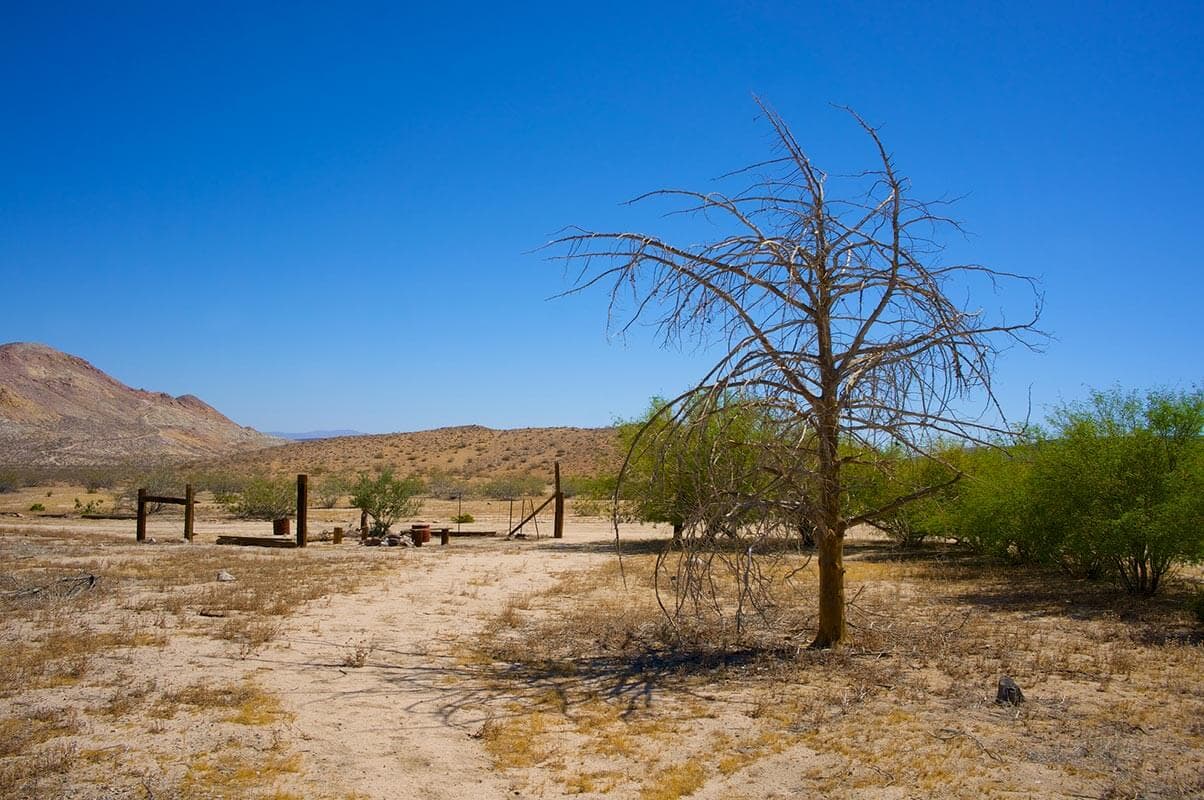
Utah declared a drought emergency in May 2026 after the lowest snowpack ever recorded, and water stress is the first domino in the sequence that ends with dead conifers and a fuel problem. How much, how deep, how often — and the fall soak that decides next summer.
Utah declared a statewide drought emergency in May 2026, following the warmest winter on record and the lowest snowpack ever measured in the state. By the U.S. Drought Monitor’s October 6 reading, essentially all of Utah was in drought— roughly 24% moderate, 54% severe, and 23% extreme. Mid-October updates began showing improvement in parts of the state as early-season storms reached higher elevations, which is welcome and does not undo a year like this one.
Those numbers move weekly, so check drought.gov for current conditions rather than trusting a figure in an article. The trend is the point: your trees went into this autumn with a water deficit, and what you do in the next few weeks matters more than usual.
Watering gets treated as a landscaping topic. On a Wasatch Back property it is closer to a forest-health and fire-mitigation topic, because water stress is the first domino in the sequence that ends with standing dead conifers and a fuel problem.
Because the most expensive work we do is frequently the downstream consequence of water stress nobody noticed.
Conifers defend themselves against bark beetles largely with pitch — resin flow that pushes out or entombs attacking beetles before they can establish. That defense is metabolically expensive, and a tree short on water has less to spend.
The classic work on ponderosa pine found exactly that: beetle attack triggered increased resin flow in unstressed trees, but not in water-stressed ones— and mortality was highest among beetle-attacked, water-stressed trees. Water stress predisposes pines to beetle-caused death. Locally, the Central Wasatch assessment makes the same point plainly: trees produce sap to deter beetles from laying eggs under the bark, and sap production falls under drought stress.
The honest nuance: this is not a universal law across every species and beetle. A 2026 study on spruce found that neither acute drought nor long-term aridity strongly affected induced defenses in spruce, and work on pinyon found resin reductions showed up only after long-term drought. Effects vary by host and by beetle. The mechanism is best established in pines; it is a strong reason to water, not a guarantee of outcome either way.
What is not in dispute on the Wasatch Back is the end state. Our bark beetle field guide covers what an infestation looks like, and Sudden Aspen Decline is a drought-initiated cascade in its own right. A dead conifer near a structure is simultaneously a falling hazard and a fuel problem. Watering is upstream of all of it, and it is cheap.
You will find confident, specific, conflicting numbers on this. Even USU Extension — the best source for Utah — publishes more than one approach:
Those are not reconcilable into one tidy number, and anyone who hands you a single figure with no range is overselling their precision. The reason they differ is real: water need depends on canopy size, soil texture, weather, and species far more than on trunk diameter, which is just a convenient proxy.
Practical approach.Use a trunk-diameter rule of thumb as your starting dose — somewhere in the 5 to 10 gallons per inch range depending on how hot and dry the stretch has been — and then verify by depth rather than trusting the arithmetic. Depth is the number that actually tells you whether you watered enough.
One limitation worth knowing: USU’s calculator is valid only for established trees with trunks over four inches. Newly planted trees are a different regime.
USU guidance is to water trees and shrubs to a depth of 18 to 20 inches. Other USU material aims deeper for mature trees — moisture reaching two to three feet on a roughly two-week cycle through the growing season. The calculator describes slow, deep irrigation as reaching at least 10 to 20 inches.
Check it rather than assume it. Push a long screwdriver or a metal probe into the soil. It slides easily through moist soil and stops at dry. If it stops at six inches, you watered the surface and the roots that matter got nothing.
This single habit corrects most watering mistakes, because the usual failure is not watering too little overall — it is watering frequently and shallowly, which trains roots upward into exactly the zone that dries out first and compacts worst.
Method matters as much as volume. USU is explicit that overhead and sprinkler irrigation is not recommended for trees— it generates excessive runoff before it ever wets deep soil.
Clay drains slowly and holds more water, so trees in clay tolerate longer gaps between waterings. Sandy and sandy-loam soils need water more often and in smaller doses, because they will not hold a big slug long enough for roots to use it.
Note that USU’s “finger test” identifies soil texture— clay, sandy loam, coarse sand — not current moisture. Texture tells you the schedule; the probe tells you today’s answer. You need both.
If you do one thing after reading this, do this one. USU’s guidance is to give trees a few more long drinks before the ground freezes, with one widely repeated version being a final deep soak around Thanksgiving weekend.
The reason is specific and often misunderstood. Evergreens respire all winter— they keep losing moisture through needles on cold, dry, windy days, which describes a great many Wasatch winter days. When the ground is frozen, roots cannot replace what the needles lose. The result is winter desiccation: browning needles and scorched foliage, characteristically worst on the southwest side where sun and wind combine.
A tree that enters winter well hydrated has a reserve to draw on. One that enters dry does not, and the damage appears in spring when nobody connects it back to October. Prioritize evergreens and anything planted within the last three years.
This belongs on the same fall pass as your hazard sweep — our winter prep checklist covers the rest of it, including why the big structural pruning should wait for late winter rather than happening now.
The signals USU points to, roughly in the order they appear:
Two complications. First, drought symptoms lag — what you are seeing this year may reflect last year’s deficit, and recovery lags the same way. Second, by the time a conifer is visibly struggling, it may already be attractive to beetles, which is a much harder problem than dry soil. Under drought conditions, extended dry periods can accelerate Ips beetle activity specifically.
It does not. Lawn sprinklers deliver frequent shallow water across a surface, which is close to the opposite of what a tree wants and encourages shallow rooting. Trees need separate, slower, deeper application.
The most common error. Doubling frequency while keeping each application shallow makes the problem worse.
Real, and it has a fire-mitigation dimension. USU notes that overwatering makes some plants grow too fast and become hazardous — soft rapid growth plus accumulating dead interior material turns a low compact shrub into a fuel pocket. Our firewise landscaping guide covers that interaction. Roots also need oxygen; saturated soil drowns them.
If a tree declined after construction, no watering schedule fixes severed or compacted roots — though irrigation genuinely helps a damaged tree cope. Our construction damage guide covers that, including supplemental watering when rainfall is under about an inch per week.
A common instinct and usually wrong. Fertilizer pushes growth the tree cannot currently support, and salts in dry soil can worsen water stress. Water first. Diagnose before feeding.
A newly planted tree has a root ball, not a root system, and until roots extend into surrounding soil it is drawing from a very small volume. That means more frequent water, applied directly over the root ball as well as the surrounding area, for the first two to three growing seasons.
This matters if you are replanting after mitigation or after a removal — and in Park City, replanting may not be optional, since removed Significant Vegetation generally has to be replaced. Budget the establishment watering alongside the plant itself. A dead replacement tree in year two means buying it twice.
On a wooded Wasatch property, irrigation is not practical across every acre, so the honest version is triage:
Canyon Cutters walks properties across Park City, Heber, Midway, and the surrounding Wasatch Back, and in a year like this one the most useful thing we do on a first visit is often just telling an owner which trees are genuinely in trouble and which look rough but will recover with water.
If you have conifers fading, aspens thinning, or recent plantings you are not sure you are watering correctly, reach out through our contact page or call (201) 960-8275. The first visit is free and the assessment comes in writing. Where thinning is the right answer, our fire mitigation and land management work reduces competition for soil moisture and fuel load in the same pass.
This article summarizes publicly available USU Extension guidance and published research, and is general information rather than a prescription for a specific tree or property. Drought conditions change weekly — the figures here reflect readings available in mid-October 2026 and should be checked against current data. Water needs vary with species, soil, exposure, and age; local watering restrictions may also apply, so check with your water provider.
Tags
Free Consultation
Tell us about your land and we'll set up a free on-site visit and walk it with you.
ISA Certified Arborist · Licensed & insured · Free, no-obligation estimates