Loading…
Loading

 Douglas LivaUT-4717AJohn HillUT-383707AJesse GardnerUT-380938ARobert ValenciaUT-391234A
Loading
Fire Mitigation & Forestry Services
July 3, 2026
Zone-by-zone defensible space, forestry thinning, and the specific fuel-reduction tactics that give Wasatch and Uinta homes a fighting chance in wildfire country.
Defining the threat: Wildfires represent one of the most significant natural hazards to mountain communities, threatening ecosystems, wildlife, and residential developments. As communities expand deeper into wildland areas, the intersection of human habitation and natural forest environments creates unique vulnerabilities.
The local context: For residents of Park City and Heber City, Utah, living among the stunning landscapes of the Wasatch and Uinta Mountains is a privilege that comes with specific responsibilities. Protecting homes and properties located on and near the ski resorts requires proactive land management and expert intervention.
Our mission: Canyon Cutters is locally owned and operated in Park City, Utah. We put a primary focus on homes and property located on and near the ski resorts of Park City. We offer a complete arborist solution for residents of Park City and Heber City, Utah. Canyon Cutters also specializes in forestry applications for fire mitigation work needed in the Wasatch and Uinta Mountains. By implementing strategic property rehabilitation and land management practices, homeowners can drastically reduce their vulnerability to natural disasters while preserving the beauty of their mountain environments.
To effectively protect a property, one must first understand how wildfires ignite, spread, and consume fuel. Wildfire behavior is dictated by a complex interplay of environmental factors that land managers must evaluate before taking action.
The fire environment: Three primary elements dictate wildland fire behavior. These elements are weather, topography, and fuel. While we cannot control the weather or alter the fundamental topography of the Wasatch and Uinta Mountains, we hold complete control over the fuel present on a property.
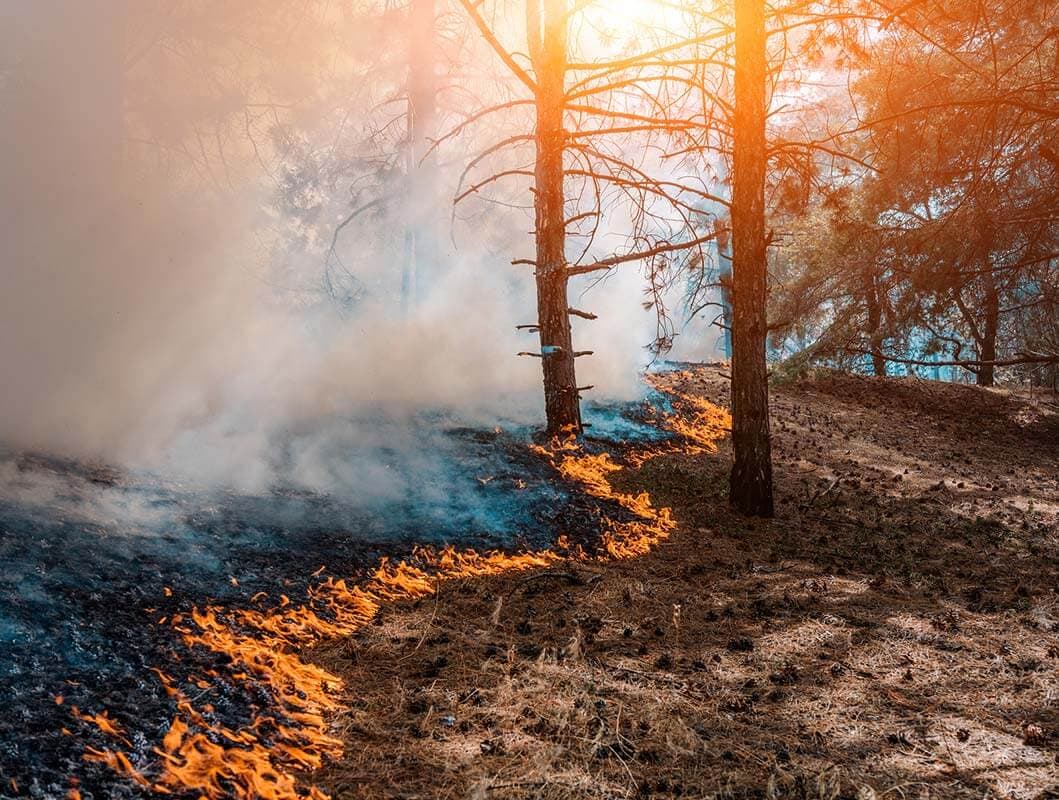
Weather conditions: High temperatures, low humidity, and strong winds create the perfect conditions for extreme fire behavior. In Utah, the late summer months bring extended periods of drought, turning vegetation into highly flammable kindling. Wind acts as a catalyst, supplying oxygen to flames and carrying burning embers over vast distances. These embers can travel miles ahead of the main fire front, igniting new spot fires on unprotected properties.
Topographic influences: The physical layout of the land significantly impacts how fast and in what direction a fire will travel. Fires naturally burn faster uphill because the radiant heat preheats the vegetation located above the flames, making it easier to ignite. Properties situated on steep slopes or at the top of ridges require substantially larger protective zones than properties on flat terrain. The majestic slopes that provide excellent skiing in the winter become potential pathways for rapidly advancing flames during the dry summer months.
Fuel characteristics: In forestry terms, fuel refers to any combustible material. This includes living trees, dead branches, dry grasses, fallen leaves, and even the structural components of a home. The moisture content, size, and arrangement of these fuels determine how intensely a fire will burn. By actively managing these fuels through professional land management, property owners interrupt the continuous path that a fire needs to travel.
Defensible space is the buffer you create between a building on your property and the grass, trees, shrubs, or any wildland area that surrounds it. This space is needed to slow or stop the spread of wildfire, protecting your home from catching fire either from direct flame contact or radiant heat. Defensible space is generally divided into specific zones, each requiring different management techniques.
Location: Zero to five feet from the exterior of the home.
Zone objective: The primary goal in this immediate perimeter is to prevent windblown embers from igniting materials directly adjacent to the house. Embers are the leading cause of home loss during wildland fires.
Actionable steps:
Location: Five to thirty feet from the home.
Zone objective: This zone aims to create a landscape where fire cannot easily spread from plant to plant or travel into the tree canopy.
Actionable steps:
Location: Thirty to one hundred feet from the home, or up to the property line.
Zone objective: The goal here is to slow the advancing fire front and reduce the overall energy and heat of the flames before they reach the inner zones.
Actionable steps:
If you are ready to secure your property and establish these critical zones, contact Canyon Cutters today to schedule a thorough property evaluation.
Maintaining the health and safety of the trees on your property is a fundamental aspect of proactive land management. Canyon Cutters provides a complete arborist solution designed to enhance the beauty of your landscape while strictly mitigating risks.
Removing a tree is often a difficult decision for property owners who value the natural woodland aesthetic. However, overcrowded forests are unhealthy forests. When trees compete too heavily for limited water, sunlight, and soil nutrients, the entire stand becomes stressed, making it susceptible to disease and insect infestations.
Identifying hazards: Dead or dying trees pose an immediate threat. Not only do they serve as dry fuel for wildfires, but they also present a physical danger of falling on structures, power lines, or people during high winds or heavy snow loads.
Professional execution: Our specialized tree removal operations are conducted with extreme precision. We utilize advanced rigging techniques and heavy equipment to safely dismantle large, hazardous trees located in tight spaces near homes or steep slopes. This careful extraction ensures that your existing structures and healthy surrounding vegetation remain completely undisturbed.
Tree pruning is not merely about aesthetics. It is a vital horticultural practice that improves the structural integrity and longevity of the tree.
Health benefits: Removing dead, diseased, or broken branches prevents decay-producing fungi from entering the healthy wood of the tree. Thinning the canopy allows for better air circulation and sunlight penetration, which reduces the likelihood of foliar diseases.
Fire safety benefits: In the context of risk reduction, tree pruning involves raising the canopy by removing the lower branches. This eliminates ladder fuels. If a surface fire spreads through low grass or brush, a raised canopy prevents those flames from reaching the highly flammable upper branches of the tree, significantly lowering the risk of a catastrophic crown fire.
After a tree is removed, the remaining stump is often viewed as a minor eyesore. However, stumps present several hidden issues.
Hazard elimination: Leftover stumps are trip hazards, especially in areas where children play or where ski trails are being established. They also complicate lawn maintenance and landscaping projects.
Pest prevention: Decaying wood naturally attracts wood-boring insects, including termites, beetles, and carpenter ants. Once these pests establish a colony in a decaying stump, they can easily migrate to healthy trees or wooden structures on your property.
Complete processing: Our professional stump grinding machinery efficiently reduces the stump to wood chips below the soil surface. This allows you to reclaim the space, plant new vegetation, or establish a smooth, hazard-free grade.
Managing large tracts of land in the Wasatch and Uinta Mountains requires heavy equipment, deep ecological knowledge, and extensive planning. Forestry applications go beyond treating individual trees. They involve managing the entire ecosystem to promote long-term resilience.
Forest thinning and spacing: Historic fire suppression policies have led to unnaturally dense forests across the western United States. By selectively thinning overcrowded stands of lodgepole pine, subalpine fir, and Douglas fir, we restore the forest to a more natural, fire-resilient state. Guidelines published by the United States Forest Service regarding wildland management highlight that mechanical thinning significantly reduces the severity of potential fires, allowing ground crews to fight blazes more effectively.
Wood chipping and debris processing: Large-scale land management generates massive amounts of organic debris. Leaving this debris on the forest floor simply trades vertical fuel for horizontal fuel. Canyon Cutters utilizes high-capacity machinery for wood chipping, converting dangerous slash piles into small chips. These chips can be spread out thinly to aid in moisture retention and soil stabilization, or they can be entirely removed from the site.
Dump truck hauling: When dealing with heavy timber, massive root wads, or an excess of chipped material that cannot be safely left on site, proper disposal is mandatory. Our dump truck hauling services ensure that all hazardous biomass is efficiently transported away from your property, leaving you with a clean, defensible landscape.
Properties located directly on or adjacent to ski resorts have highly specific needs. The goal is to maximize the recreational value of the property while strictly adhering to safety standards.
Clearing trails for ski in and ski out: Having direct access to the slopes is the ultimate luxury for a mountain home. However, cutting a trail through dense alpine timber requires careful planning.
Trail design: A proper ski trail must be wide enough to allow for safe turning radiuses and snowplow clearance, but narrow enough to maintain the secluded, forested feel of the property.
Execution and safety: We specialize in clearing trails for ski in and ski out access. This involves precision tree felling, complete stump grinding to prevent buried hazards under the snowpack, and meticulous grading. We remove low hanging branches that could pose a danger to skiers and ensure the path is optimized for natural snow accumulation.
For homeowners looking to enhance their ski-in/ski-out experience while maintaining strict safety standards, contact Canyon Cutters to design and clear your perfect custom trail.
Wildfires, heavy storms, and even necessary land clearing activities can take a toll on the local soil and ecosystem. We believe that responsible forestry management includes active restoration and stabilization efforts.
The mountainous terrain of Park City and Heber City is naturally prone to erosion, especially after vegetation has been removed or during the heavy spring snowmelt. Vegetation acts as an anchor, holding topsoil in place with complex root systems. When trees and shrubs are cleared, the exposed soil is highly vulnerable to washing away.
The mechanics of erosion: Uncontrolled runoff can strip away nutrient-rich topsoil, deposit sediment into local waterways, and undermine the foundations of roads and structures. According to data provided by the Environmental Protection Agency on watershed management, controlling nonpoint source pollution from sediment runoff is critical for maintaining clean local water supplies.
Strategic implementation: Canyon Cutters implements specialized erosion and drainage construction solutions. This involves installing physical barriers like silt fences and straw wattles, constructing French drains to reroute subsurface water away from structures, and building retaining walls. We reshape the topography slightly to ensure that water flows away from your home and disperses harmlessly into natural drainage basins.
Mountain weather is notoriously unpredictable. Severe thunderstorms, microbursts, and heavy blizzards can cause massive damage to mature trees in a matter of minutes.
Emergency response: Uprooted trees and snapped trunks create an immediate chaotic environment. Broken limbs suspended in the canopy, known in forestry as widow-makers, pose a severe threat to anyone walking below.
Efficient restoration: Our storm cleanup services are designed to quickly and safely remove fallen timber, chip scattered branches, and secure damaged trees that can still be saved through corrective pruning. We restore order to your property quickly, allowing you to regain safe access to your home and driveway.
Sometimes a property has suffered from years of neglect, an uncontrolled pest infestation like the mountain pine beetle, or minor fire damage. Returning the land to a healthy state requires a multi-phased approach.
Rehabilitation goals: Property rehabilitation focuses on soil amendment, removing invasive plant species, and replanting native, drought-resistant vegetation. We focus on establishing deep-rooting native grasses that hold the soil together and planting fire-resistant deciduous trees like Quaking Aspen, which naturally act as a buffer against fast-moving wildfires.
Protecting and maintaining a mountain property is not a seasonal task. It requires year-round vigilance and adaptation to the changing weather conditions of the Wasatch and Uinta Mountains.
Vegetation management: Spring is the time for rapid plant growth. This is the optimal season to assess winter damage, perform corrective pruning, and clear out dead brush before the dry heat of summer arrives. Ensuring that your defensible space zones are clean and up to code during the spring guarantees that your property is prepared for the peak fire danger months of July and August.
Debris removal: As deciduous trees drop their leaves and pine trees shed older needles, thick layers of highly combustible material accumulate on the ground, on roofs, and under decks. Thoroughly clearing this dry vegetation before the snow falls prevents it from becoming a matted, rotting layer that stifles healthy grass growth in the spring.
Winter dynamics: The heavy snowpacks that make Park City famous also present unique challenges. Heavy, wet snow can easily snap large tree branches, dropping them onto power lines or driveways.
Clearing operations: Maintaining safe access to your property during the winter is critical. Canyon Cutters provides professional snow removal services to ensure that your driveways, access roads, and critical pathways remain clear. Prompt snow removal prevents ice buildup and ensures emergency vehicles can always reach your home in case of an incident.
When it comes to the safety of your home and the health of your land, choosing a local contractor who intimately understands the specific ecological and regulatory landscape of Central Utah is non-negotiable.
Local expertise: Canyon Cutters is locally owned and operated in Park City, Utah. We put a primary focus on homes and property located on and near the ski resorts of Park City. We know the soil, we know the native tree species, and we understand the microclimates of the Wasatch and Uinta Mountains better than out-of-state contractors.
Regulatory compliance: Fire mitigation work often requires strict adherence to local county ordinances, Homeowner Association guidelines, and municipal codes. The guidelines published by the Utah Division of Forestry, Fire and State Lands detail specific requirements for wildland-urban interface areas. We handle all operations in strict compliance with these local regulations, ensuring that your property not only looks beautiful but meets all legal safety standards.
All-in-one solution: By offering a complete arborist solution for residents of Park City and Heber City, Utah, we eliminate the need for you to hire multiple specialized contractors. From the initial tree removal and stump grinding to the final erosion control and dump truck hauling, our team manages the entire project from start to finish.
Take the decisive step in protecting your mountain home today. Contact Canyon Cutters for an expert assessment of your property.
Professional mitigation involves assessing the landscape to create defensible space around structures. Key services include strategic tree removal to thin dense canopies, tree pruning to eliminate low-hanging ladder fuels, wood chipping to safely dispose of brush, and clearing dead vegetation from the property.
Homes in Park City and Heber City are often nestled directly within natural forest environments, known as the wildland-urban interface. Defensible space acts as a vital buffer, slowing the advance of wildland fires and preventing windblown embers from igniting the structures on the property.
Absolutely. A fire-safe landscape does not mean a barren landscape. By maintaining proper spacing between tree canopies, removing dead branches, and ensuring lower branches are pruned away from the ground, you can safely retain beautiful, healthy trees around your home.
Stump grinding eliminates physical trip hazards and clears space for better landscaping. From a safety perspective, removing decaying stumps prevents wood-boring insects from establishing colonies near your home and removes dense, slow-burning fuel sources that can smolder long after a primary fire has passed.
Yes, we provide extensive winter services. Alongside essential tree hazard removals, Canyon Cutters offers professional snow removal to keep your driveways and access roads clear and safe. We also specialize in clearing trails for ski-in and ski-out access, perfectly timed for the winter season.
Living in the majestic elevations of Park City and Heber City requires an active commitment to property maintenance and disaster preparedness. Fire mitigation work is not a luxury; it is an absolute necessity for anyone residing in the wildland-urban interface of the Wasatch and Uinta Mountains. By understanding fire behavior and diligently applying the principles of defensible space, homeowners can drastically increase the survivability of their properties.
Canyon Cutters is dedicated to providing a complete arborist solution tailored to the unique needs of mountain properties. From advanced forestry applications and heavy dump truck hauling to delicate tree pruning and ski trail construction, our locally owned team possesses the heavy equipment and specialized knowledge required to execute these tasks flawlessly. Investing in professional land management today ensures the safety, beauty, and ecological health of your mountain retreat for generations to come.
Tags
Free Consultation
Tell us about your land and we'll set up a free on-site visit and walk it with you.
ISA Certified Arborist · Licensed & insured · Free, no-obligation estimates